Essential data revealing why ecommerce brands that master the post-purchase phase win customer loyalty and drive sustainable growth
The post-purchase experience has become the defining battleground for ecommerce success. With 93% of consumers considering this phase important to their overall shopping experience, brands can no longer afford to treat what happens after checkout as an afterthought. Yet a fundamental gap persists: most ecommerce operations rely on disconnected systems for returns, order tracking, delivery claims, and customer service. This creates friction precisely when customers need seamless resolution. Platforms like Kodif’s Resolution Agent are addressing this challenge by combining AI customer service with the transaction capabilities needed to execute post-purchase actions directly within customer conversations.
Key Takeaways
- Post-purchase failures drive massive churn: 79% of consumers report they may not purchase again from a brand after a poor post-purchase experience.
- Retention economics favor existing customers: A 5% improvement in retention can boost profits by 25% to 95%, while acquiring new customers costs about five times more than retaining existing ones.
- Returns shape purchase decisions: 90% check return policies before buying, and 76% will not buy again after a poor returns experience.
- Merchants own delivery accountability: In 2025, only 39% blamed shipping providers for delivery-related issues, down significantly from 2022.
Understanding the Foundation: What Is the Post-Purchase Experience?
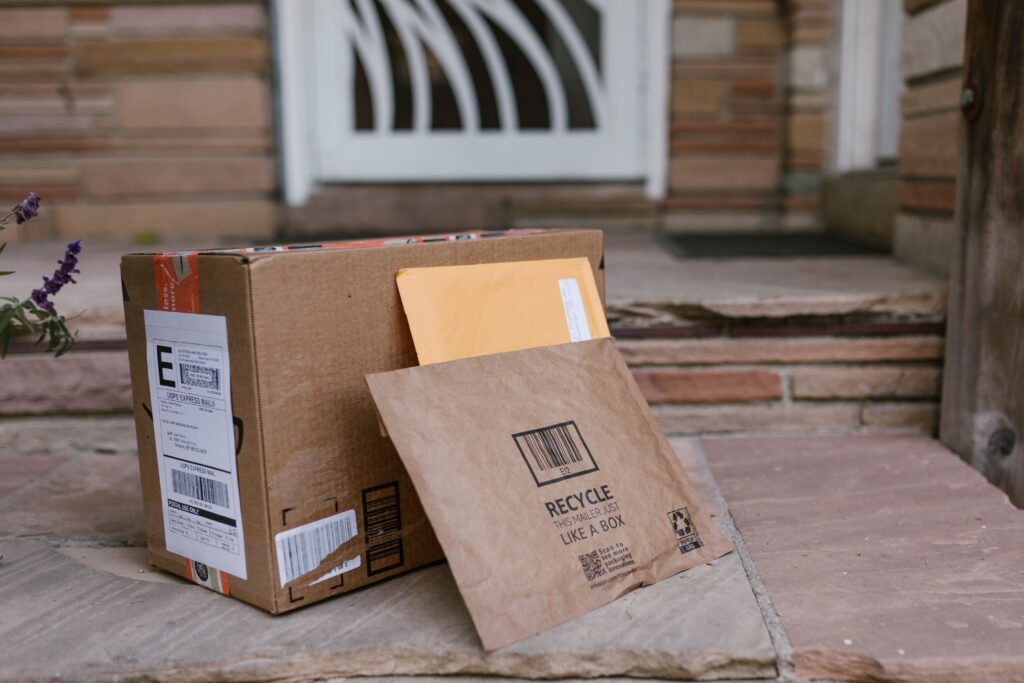
The post-purchase experience encompasses every interaction between a brand and customer from the moment of checkout through delivery, product use, returns, and ongoing support. This phase includes order confirmation, shipping notifications, delivery tracking, unboxing, returns processing, exchanges, refunds, and customer service interactions. For ecommerce brands, mastering this phase determines whether a first-time buyer becomes a repeat customer.
1. 83% of consumers see room for improvement in post-purchase
Despite its acknowledged importance, the vast majority of shoppers believe brands can do better in the post-purchase phase. This gap between consumer expectations and current performance represents both a challenge and an opportunity for brands willing to invest in better systems.
2. 79% may not purchase again after a poor post-purchase experience
A single negative post-purchase interaction can permanently damage customer relationships. Nearly four in five consumers indicate they may never return to a brand following a poor experience with returns, shipping, or customer service after checkout.
The CX Imperative: Why Customer Experience Drives Loyalty and Growth
Customer experience has evolved from a support function to a core revenue driver. The economics are clear: brands that deliver exceptional post-purchase experiences retain more customers, generate more repeat purchases, and spend less on acquisition. Agentic AI platforms that can actually execute transactions within customer conversations are proving essential for scaling these experiences.
3. 32% of consumers will walk away after one bad experience
Brand loyalty is more fragile than many companies assume. 32% of consumers may switch brands after a single bad experience, highlighting the importance of consistent execution across every touchpoint.
4. 65% of company revenue comes from existing customers
Existing customer relationships drive nearly two-thirds of total revenue for many businesses. About 65% of revenue comes from existing customers according to the cited retention benchmark, making post-purchase excellence a strategic priority for sustainable growth.
The Automation Advantage: Streamlining Post-Purchase Workflows with AI
Post-purchase support creates substantial operational costs, particularly when human agents handle repetitive inquiries. Automation that can execute actions rather than just answer questions offers significant efficiency gains. Many AI customer support platforms depend on third-party commerce APIs and can execute the actions those APIs expose, but workflows can stall when the underlying system does not provide the write endpoints needed to complete them.
Kodif frames this API-layer limitation as a 35-40% automation ceiling, while post-purchase-native transaction access can support higher end-to-end automation. Kodif explicitly describes the 35% to 40% figure as its market framing rather than a universal industry benchmark.
5. 85% of customer churn due to poor service was preventable
The vast majority of customer churn attributed to poor service may have been avoidable. A customer service benchmark cited by Forbes found that 85% of customer churn due to poor service was preventable. This statistic reinforces the case for resolving customer issues quickly and completely rather than creating additional friction.
Seamless Returns and Exchanges: Boosting Satisfaction and Reducing Friction
Returns represent both a major cost center and a critical loyalty opportunity. Brands that automate refunds and returns within the customer conversation eliminate the friction of separate portals and manual processes. When AI can execute returns, exchanges, and store credit directly, customers get faster resolution while brands reduce operational overhead.
6. Average ecommerce return rate reached 16.9% in 2024
Returns affect a significant portion of online orders. The 16.9% average return rate reported for 2024 means brands must optimize this workflow at scale rather than treating it as an exception to normal operations.
7. 90% of shoppers check return policies before purchasing
Return policies influence buying decisions before checkout even occurs. Nine in ten shoppers check return policies before buying, making returns a pre-purchase conversion factor as well as a post-purchase experience. The source was updated in 2026 and cites the 2025 State of Post-Purchase findings.
8. 76% will not buy again after a poor returns experience
A difficult return process can destroy future revenue potential. Over three-quarters of shoppers said they would not buy again after a poor returns experience, showing how closely the return process is connected with retention.
9. 82% cite free returns as an important purchase consideration
Free return shipping remains an important part of purchase decisions. More than four in five shoppers cited free returns as an important consideration when making an online purchase in 2025, making return economics a strategic pricing decision.
10. U.S. consumers returned $890 billion worth of merchandise in 2024
The financial impact of returns is substantial. Consumers returned $890 billion worth of merchandise in the United States in 2024, underscoring the scale of returns that retailers must process.
Tracking and Transparency: Keeping Customers Informed Every Step of the Way
Order tracking represents one of the highest-volume post-purchase touchpoints. Effective WISMO automation addresses a major category of customer inquiries while reducing anxiety and building trust. AI that can pull real-time tracking data and communicate status proactively can transform this cost center into a relationship-building opportunity.
11. Only 7% of UK shoppers say fast-delivery promises are consistently met
Consumer trust in fast-delivery commitments is remarkably low. In 2026 research involving 2,000 UK consumers, only 7% said fast-delivery promises are consistently met, indicating a widespread credibility gap around delivery speed.
Delivery Claims and Shipping Protection: Building Trust and Mitigating Risk
Delivery issues create some of the most frustrating customer experiences. When packages arrive damaged, go missing, or face unexpected delays, customers expect fast resolution. AI platforms that can resolve eligible claims directly within the conversation, rather than routing customers to separate claims portals, can significantly improve the resolution experience.
Kodif notes that approximately 97% of protection claims are approved, arguing that multi-step claims processes can create unnecessary friction around outcomes that are unlikely to be disputed.
12. More than 84% are unlikely to buy again after a bad last-mile delivery experience
A single delivery failure can end a customer relationship. More than 84% of shoppers are unlikely to buy from a company again after a bad last-mile delivery experience, making claims resolution speed and communication critical.
13. 90% of consumers say shipping accounts for at least half their online experience
Delivery quality shapes overall brand perception. Nine in ten shoppers report that shipping accounts for at least half of their total online shopping experience, elevating fulfillment from logistics to core CX.
14. In 2025, only 39% of consumers blamed carriers for delivery issues
Accountability has shifted from carriers to merchants. In 2025, just 39% of consumers blamed shipping providers when delivery-related problems occurred, compared with 83% in 2022. This shift makes delivery claims a brand reputation issue as well as a logistics issue.
Retention Strategies: Nurturing Long-Term Customer Relationships
Customer retention delivers outsized returns compared with acquisition. Existing customers are cheaper to serve, more likely to purchase again, and can generate higher lifetime value. Platforms like Kodif’s Retention Agent support subscription retention through automated actions including pauses, skips, frequency changes, and targeted offers that keep customers engaged.
15. Average non-subscription ecommerce churn rate is approximately 77% annually
Customer attrition runs extraordinarily high in non-subscription ecommerce. This 77% annual churn benchmark means more than three-quarters of customers may not return after their first purchase, although rates vary significantly by product category, purchase frequency, and the repurchase window used.
16. A 2022 study found merchants lost an average of $29 per newly acquired customer
Customer acquisition economics were already under pressure in 2022. SimplicityDX research found merchants lost an average of $29 per newly acquired customer that year, up from $9 in 2013. The finding shows how rising acquisition costs and product returns were pressuring ecommerce profitability at the time.
Connecting Post-Purchase Excellence to Long-Term Success
The statistics above paint a clear picture: post-purchase experience strongly influences customer retention, and retention drives sustainable ecommerce profitability. When 79% of consumers report they may not return after a poor post-purchase experience, and more than 84% of shoppers are unlikely to buy again after a bad last-mile delivery experience, the margin for error is small. Traditional approaches that treat post-purchase as a disconnected afterthought, routing customers between portals for returns, tracking inquiries, and delivery claims, create precisely the friction that can drive churn.
The economic imperative is equally clear. With non-subscription ecommerce facing approximately 77% annual churn, brands cannot afford to lose customers to preventable post-purchase friction. Yet many struggle because their AI customer service platforms lack the transaction capabilities to resolve issues end to end. When AI can answer “Where is my order?” but cannot process the return, issue the refund, or resolve the delivery claim, customers still face additional steps and delays.
Kodif’s approach integrates the AI intelligence layer with post-purchase transaction rails, enabling agentic AI platforms to execute eligible returns, exchanges, store credit, order modifications, and delivery claims directly within customer conversations. This architectural difference, combining both the intelligence to understand customer intent and the write access to complete transactions, transforms post-purchase from a cost center into a competitive advantage.
When 90% check return policies before purchasing and 82% cite free returns as an important purchase consideration, seamless post-purchase execution becomes a pre-purchase conversion factor, not just a retention play.
The Structural Challenge: Why Write Access Matters
The statistics above reveal a clear pattern: post-purchase excellence drives retention, and retention drives profitability. Yet many ecommerce brands struggle to deliver consistent post-purchase experiences because their systems are fragmented.
Many AI CX platforms sit above commerce systems and depend on third-party commerce APIs. They can retrieve information and execute actions those APIs expose, but may hit limits when a workflow requires write access the underlying platform does not provide.
Common capabilities include:
- Retrieving order information
- Explaining policies
- Executing supported API actions
- Routing exceptions to human agents
The limitation appears when the required transaction is not exposed through those APIs, such as certain:
- Returns
- Store credit actions
- Exchanges
- Delivery claims
- Order modifications
Kodif frames this architectural constraint as a roughly 35-40% automation ceiling for API-layer AI CX platforms. The issue is not that these platforms are universally read-only; it is that end-to-end resolution depends on whether the necessary write endpoints exist. Kodif describes the percentage as its market framing rather than a universally established industry benchmark.
Platforms that combine the AI intelligence layer with post-purchase transaction rails can move beyond this limitation. When AI can execute eligible actions within the conversation, brands can automate more post-purchase workflows end to end.
Frequently Asked Questions
What is the difference between customer service and customer experience?
Customer service refers to the specific interactions and support touchpoints where customers seek help with issues or questions. Customer experience encompasses the entire relationship between a customer and brand across all touchpoints, including pre-purchase research, checkout, delivery, product use, returns, and ongoing engagement. Effective post-purchase CX requires customer service capabilities integrated with transaction execution rather than treating support as a separate function.
How does post-purchase experience impact customer loyalty?
Post-purchase experience can strongly influence whether customers return or churn. With 79% of consumers reporting they may not purchase again after a poor post-purchase experience, and 76% saying they would not buy again after a poor returns experience specifically, this phase can materially affect repeat purchase behavior. Brands that resolve issues quickly and completely build loyalty, while those that create friction risk losing customers.
What are common challenges in managing post-purchase operations?
The most common challenges include fragmented systems that require customers to navigate between portals, lack of real-time visibility into order and delivery status, slow claims resolution processes, inconsistent policies across channels, and support teams that can answer questions but cannot execute transactions. These challenges create the friction that drives many of the statistics above, where consumers consistently report room for improvement in post-purchase experiences.
How can AI improve the efficiency of returns and exchanges?
AI can transform returns by executing eligible transactions directly within the customer conversation rather than routing customers to separate portals. This includes checking return eligibility against policies, processing return requests, issuing store credit or refunds, and initiating exchanges. Platforms with the necessary write access to commerce systems can complete these actions autonomously, while platforms without the required transaction access may need to escalate execution to human agents or external portals.
Can AI really take action on behalf of customers in post-purchase scenarios?
Yes, but the capability depends on architecture. AI platforms that maintain appropriate write access to commerce and fulfillment systems can execute eligible transactions including returns, exchanges, refunds, store credit, order modifications, and delivery claims. Platforms that lack the required write endpoints can retrieve information and suggest actions but may need to hand off execution to human agents or external workflows. This distinction between answering and acting is a key differentiator in modern post-purchase AI.