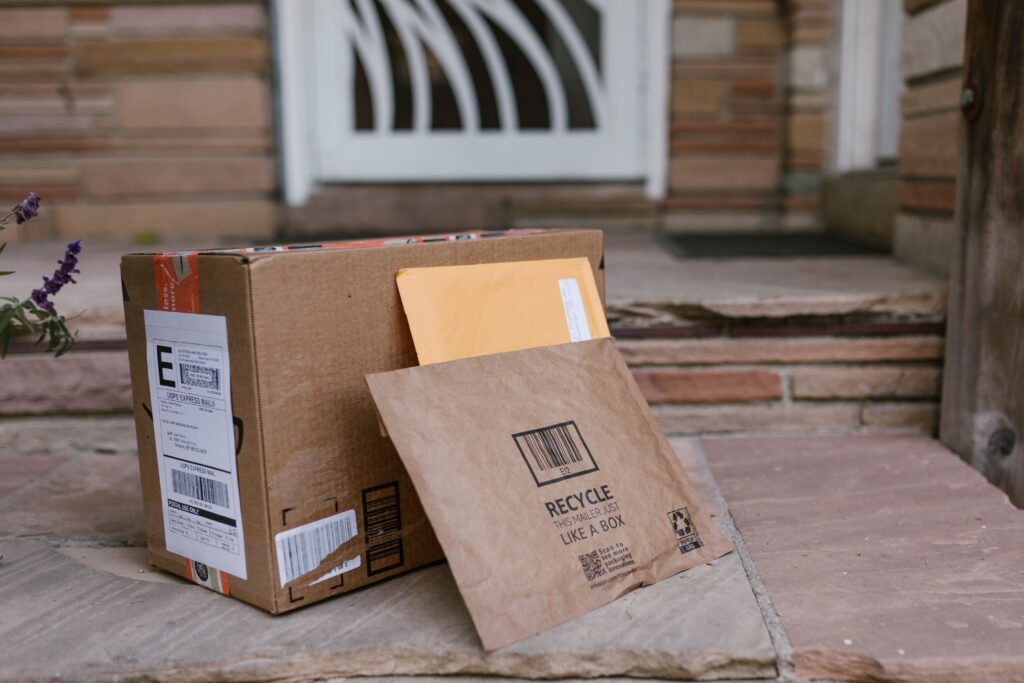
Essential data revealing the scale, regional variations, and operational challenges of managing returns across global markets
International ecommerce returns represent one of the most complex challenges facing global brands today. With US retail returns projected to total $849.9 billion in 2025, brands expanding across borders face a fragmented landscape of customer expectations, logistics networks, and policy requirements. For DTC and Shopify brands operating internationally, the ability to execute returns, exchanges, and refunds directly within customer conversations through agentic post-purchase platforms has become increasingly important.
Key Takeaways
- Global returns exceed $640 billion annually. The sheer scale of international returns creates both operational challenges and opportunities for brands that can automate resolution workflows.
- Regional return rates vary dramatically. Germany sees a 44% return rate, while North America averages 17–24%, requiring localized strategies.
- 79% of shoppers abandon carts over return concerns. Return policies directly impact conversion, making seamless post-purchase experiences essential for cross-border sales.
- 46% would buy internationally with free returns. Returns friction is a primary barrier to cross-border purchasing, representing significant untapped revenue.
- 55% of global shoppers mainly buy from retailers offering free returns. Return cost strategy plays an important role in both market expansion and post-purchase experience.
- 37% of business shippers use AI for returns management. Automation adoption is accelerating as brands seek to manage multi-region complexity at scale.
The Global Landscape of Ecommerce Returns: Understanding Cross-Border Challenges
Managing returns across international markets introduces layers of complexity that domestic operations do not encounter. Customs requirements, consumer protection rules, logistics networks, and customer expectations vary by market. The statistics below show both the scale of returns and how widely return behavior differs across countries.
1. US retail returns were projected to total $849.9 billion in 2025
The National Retail Federation and Happy Returns projected $849.9 billion in total US retail returns for 2025. The projection highlights the scale of return volumes US retailers face. For international brands entering the US market, the scale of the returns economy underscores why post-purchase operations need to be treated as a core business function.
2. An estimated 19.3% of online sales were expected to be returned in 2025
NRF reported that an estimated 19.3% of online sales would be returned in 2025. For ecommerce brands, return processing is not an edge case, it is a recurring operational requirement.
3. 64% of global shoppers had returned an online purchase in DHL’s 2025 survey
DHL found that 64% of global shoppers had returned an item to an online retailer. Returns have become a normal part of ecommerce behavior rather than an unusual exception. Brands serving multiple countries need workflows that can apply the appropriate policy while keeping the experience consistent.
4. 81% of Chinese shoppers had returned an online purchase in DHL’s 2025 survey
DHL reported that 81% of Chinese shoppers had returned an item to an online retailer. The country-level figure highlights how return participation can differ substantially from the global average and why international brands should avoid assuming one market’s behavior applies everywhere.
5. 83% of Indian shoppers had returned an online purchase in DHL’s 2025 survey
In India, 83% of shoppers surveyed by DHL said they had returned an item to an online retailer. For brands expanding into India, this level of return participation increases the importance of clear policies, local return options, and efficient resolution workflows.
6. 78% of German shoppers had returned an online purchase in DHL’s 2025 survey
DHL found that 78% of German shoppers had returned an item to an online retailer. High participation in online returns makes localized return workflows especially important for brands serving German customers.
7. 68% of US shoppers had returned an online purchase in DHL’s 2025 survey
In the United States, 68% of shoppers surveyed by DHL reported having returned an online purchase. The figure reinforces the role of returns as an established part of the ecommerce experience in the US market.
Driving Efficiency: Returns Management Software for International Operations
Technology has become essential for managing the complexity of multi-region returns. Manual processes become harder to maintain as brands add different policies, carriers, fulfillment locations, and customer expectations. Recent research also shows growing adoption of AI in returns and fraud workflows.
8. 37% of business shippers use AI tools for returns
FedEx reported in 2026 that 37% of business shippers currently use AI tools for returns. The finding reflects growing interest in using automation to support return forecasting, decision-making, and post-purchase operations. Kodif can take this further by executing eligible returns and exchanges directly within the customer conversation.
9. 51% of business shippers plan future AI adoption for returns
The same FedEx Returns Survey found that 51% of business shippers plan future adoption of AI tools for returns. That planned adoption suggests returns automation is moving from early experimentation toward broader operational use.
10. 64% of merchants said returns-process updates were a priority in NRF’s 2025 survey
In NRF’s 2025 research, 64% of merchants said updating their returns process was a priority for the following six months. The finding shows that returns-process improvements were a near-term priority for most surveyed merchants.
11. 85% of retailers surveyed in 2025 said they used AI to detect or prevent return fraud
NRF reported that 85% of surveyed retailers were employing AI to detect or prevent return fraud. Fraud detection is one area where automation can help retailers evaluate risk while maintaining faster experiences for legitimate customers.
12. Online return rates were 21% higher than overall return rates in 2024
NRF reported that online return rates were 21% higher than overall return rates in 2024. NRF also noted that its 2023 study used a different methodology, so the annual rates should not be compared directly. The online-versus-overall gap reinforces the importance of scalable ecommerce return workflows.
13. Retailers incurred $145 million in returns for every $1 billion in sales in 2023
NRF reported approximately $145 million in returns for every $1 billion in sales for the average retailer in 2023. At that scale, improvements to return processing, fraud controls, and inventory recovery can have meaningful financial impact.
The Cost of International Returns: Key Ecommerce Statistics
Returns create financial pressure through lost sales, fraud, logistics costs, and operational workload. International returns add further complexity because brands may also need to coordinate cross-border carriers, fulfillment locations, policies, and customer expectations.
14. 9% of all returns were fraudulent in NRF’s 2025 research
NRF’s 2025 Retail Returns Landscape found that 9% of returns were fraudulent. The figure demonstrates why returns workflows need both customer-friendly resolution paths and controls designed to identify suspicious behavior.
15. US retailers reported $101 billion in return fraud and abuse losses in 2023
NRF and Appriss Retail reported $101 billion in losses from return fraud and abuse among US retailers in 2023. For brands operating across multiple markets, fraud controls need to balance loss prevention with a low-friction experience for legitimate customers.
16. Retailers lost $13.70 to fraud and abuse for every $100 returned in 2023
NRF and Appriss Retail reported $13.70 per $100 in return fraud and abuse losses in 2023. Automated risk checks can help brands evaluate claims consistently while allowing legitimate returns to move through the process quickly.
17. 45% of shoppers surveyed in 2025 said bending return rules can be acceptable
NRF found that 45% of shoppers said it was acceptable to “bend the rules” when making returns, particularly when they were dissatisfied with a purchase. The finding illustrates why return policies need clear guardrails rather than relying entirely on manual judgment.
18. 82% of consumers said free returns were an important purchase consideration in 2025
NRF reported that 82% of consumers considered free returns an important factor when shopping online. Return-cost strategy can therefore affect both post-purchase economics and the initial purchase decision.
Beyond the Sale: The Importance of Agentic Post-Purchase CX in International Returns
Post-purchase experience directly affects whether customers feel comfortable buying again. Cross-border transactions can add more uncertainty because customers may be dealing with unfamiliar carriers, policies, and fulfillment processes. Agentic AI that can execute actions within conversations, rather than simply answer questions or route customers to portals, can reduce that friction.
19. 79% of global shoppers would abandon their cart if their preferred returns option was unavailable
DHL’s 2025 survey found that 79% of global shoppers would abandon their cart if their preferred returns option was not offered. Return experience therefore affects conversion before the purchase is even completed.
20. 71% of consumers said a poor returns experience made them less likely to shop with a retailer again
NRF reported in 2025 that 71% of consumers were less likely to shop with a retailer again after a poor returns experience. For brands investing heavily in customer acquisition, returns friction can undermine retention after the first purchase.
AI resolution agents can reduce this friction by resolving eligible post-purchase requests directly within the conversation.
21. 76% of consumers were more likely to choose an instant refund or exchange option in 2025
NRF found that 76% of consumers were more likely to choose a return option offering an instant refund or exchange. Fast resolution is therefore an important part of the return experience, especially when customers already expect immediate digital interactions elsewhere in ecommerce.
22. 76% of global shoppers will not buy from a retailer if they distrust the delivery or returns provider
DHL’s 2026 research found that 76% of global shoppers will not buy from an online retailer if they do not trust the delivery or returns provider. Trust in post-purchase infrastructure can directly influence whether a shopper completes the purchase.
23. 58% of global shoppers have abandoned a purchase because the returns offering did not meet expectations
According to DHL’s 2026 research, 58% of global shoppers have abandoned an online purchase because the returns offering did not meet their expectations. Returns strategy is therefore part of conversion strategy, not simply a process that begins after checkout.
24. 43% of global shoppers say free returns would encourage them to buy internationally
DHL’s 2026 research found that 43% of global shoppers say free returns would encourage them to buy from international retailers. This newer DHL finding shows that return costs remain an important barrier to cross-border conversion.
Navigating Return Policies: Insights for Global Shoppers and Merchants
Return policies vary across markets because of consumer expectations, legal requirements, competitive pressure, and logistics infrastructure. Successful international brands need flexible policy frameworks rather than forcing every customer through the same workflow.
Plain-English policy builders give CX teams a way to configure region-specific rules without depending on engineering for every change.
25. 55% of global shoppers mainly bought from retailers offering free returns in DHL’s 2025 survey
DHL found that 55% of global shoppers mainly bought from retailers that offered free returns. The statistic shows how returns policy can influence retailer selection as well as the post-purchase experience.
26. 54% of global shoppers had returned an item because it was the wrong size
DHL’s 2025 research found that 54% of global shoppers had returned an item because it was the wrong size. International ecommerce can make fit and sizing especially challenging because brands and shoppers may use different measurement conventions.
Clear product information and efficient exchange workflows can help turn sizing-related returns into retained revenue.
27. 37% of global shoppers had spent more to get free delivery and then returned the extra items
DHL reported that 37% of global shoppers had added items to reach a free-delivery threshold and later returned the extras. The behavior demonstrates how delivery incentives can affect downstream return volume.
28. 33% of global shoppers said return costs stopped them from buying internationally
DHL’s 2025 cross-border research found that 33% of global shoppers would not buy from other countries because of return costs. For international brands, return economics can therefore become a direct barrier to market expansion.
29. 67% of global shoppers preferred parcel lockers or shops for returns in DHL’s 2025 survey
DHL reported that 67% of global shoppers preferred returning unwanted items through a parcel locker or parcel shop. Offering familiar drop-off methods can make international returns more convenient while reducing reliance on scheduled home collection.
Optimizing Reverse Logistics: Streamlining Multi-Region Return Flows
The physical infrastructure supporting international returns influences both customer convenience and operational efficiency. Drop-off locations, lockers, return centers, transportation networks, and inventory recovery processes all shape the cost and speed of reverse logistics.
30. 63% of global shoppers prefer returning items through parcel lockers or parcel shops in 2026
DHL’s 2026 research found that 63% of global shoppers prefer returning unwanted items to a parcel locker or parcel shop. Out-of-home returns have become a major part of the modern ecommerce returns experience.
31. 75% of European shoppers prefer out-of-home return locations
In Europe, DHL found that 75% of shoppers prefer returning items through parcel lockers or parcel shops. The regional difference reinforces why return-method availability should be localized rather than standardized globally.
32. 43% of US shoppers prefer returning items through a parcel shop or convenience store
DHL’s 2026 country data shows that 43% of US shoppers prefer a parcel shop or convenience store for returns. The finding illustrates the need to support multiple return methods rather than relying on a single reverse-logistics model.
33. 45% of German shoppers prefer returning items through a parcel shop or convenience store
In Germany, DHL found that 45% of shoppers prefer returning items through a parcel shop or convenience store. Regional infrastructure and customer habits can materially affect which return options brands should prioritize.
34. Returns generated an estimated 8.4 billion pounds of landfill waste in 2023
Optoro reported that returns accounted for 8.4 billion pounds of landfill waste in 2023. Efficient reverse logistics can therefore support both margin recovery and sustainability by improving the chances that returned merchandise is resold, redirected, or otherwise kept out of disposal channels.
The Role of Shipping Protection in Cross-Border Returns and Claims
Shipping protection becomes particularly useful for international orders because packages travel through longer and more complex logistics chains. When loss or damage occurs, brands need a fast way to evaluate eligibility and resolve the claim without creating another disconnected customer journey.
35. Approximately 97% of shipping protection claims are approved
Kodif reports that approximately 97% of protection claims are approved. That approval rate supports a simpler claims experience for eligible cases rather than forcing every customer through a separate portal.
Kodif’s delivery claims automation can resolve eligible delivery and shipping protection claims directly within the customer conversation, using order information, protection status, and policy rules to determine the appropriate next action.
What These Statistics Mean for International Ecommerce Brands
The data paints a clear picture: returns are a core part of international ecommerce, but customer behavior, preferred return methods, and policy expectations differ across markets. Brands relying on manual processes or disconnected systems can struggle to apply those differences consistently as they expand.
For brands ready to improve international returns operations, platforms that combine AI intelligence with transaction execution offer a more direct path to resolution. Kodif’s Resolution Agent can handle eligible post-purchase workflows directly within customer conversations instead of requiring customers or support agents to move between separate systems.
Key capabilities for multi-region returns operations include:
- Regional policy automation: Plain-English policy builders let CX teams define market-specific return rules without waiting on engineering.
- Conversational transaction execution: Kodif can execute eligible returns, exchanges, refunds, store credit, and other post-purchase actions directly within the support conversation.
- Fraud controls with customer context: Automated workflows can evaluate eligibility and policy conditions while escalating cases that need additional review.
- Scalable post-purchase workflows: Automation helps teams process higher return volumes without requiring every request to be completed manually.
- Integrated shipping and claims: Delivery claims automation can resolve eligible loss, damage, and shipping protection workflows within the conversation.
Traditional post-purchase platforms have the transaction rails. AI CX platforms have the intelligence layer. Kodif combines both, connecting the customer conversation to the actions required to resolve the issue.
Frequently Asked Questions
What are the biggest challenges for international ecommerce returns?
The biggest challenges include different customer expectations, consumer protection requirements, carrier networks, return methods, currencies, refund workflows, and inventory locations across markets. These differences make it difficult to operate international returns through one rigid process.
How can technology improve the international returns process?
Technology can connect customer conversations with return policies, order data, carriers, and transaction systems. Instead of sending a customer to another portal, an action-capable agent can check eligibility and execute supported returns, exchanges, credits, or refunds directly within the conversation.
What role does AI play in managing multi-region returns?
AI can identify customer intent, apply the relevant policy, evaluate available resolution paths, detect cases that need additional review, and execute supported actions when it has the required transaction access. The key distinction is whether the AI can take action or only provide information.
How do return policies differ across various countries?
Return policies vary because markets have different consumer laws, competitive expectations, logistics infrastructure, and preferred return methods. International brands need policies that can adapt to local requirements while maintaining consistent operational controls.
Can shipping protection reduce the impact of international returns?
Shipping protection can help brands resolve eligible loss and damage issues without turning every delivery problem into a traditional return. When protection and delivery claims are integrated into the customer conversation, brands can evaluate the claim and complete the appropriate resolution with fewer handoffs.