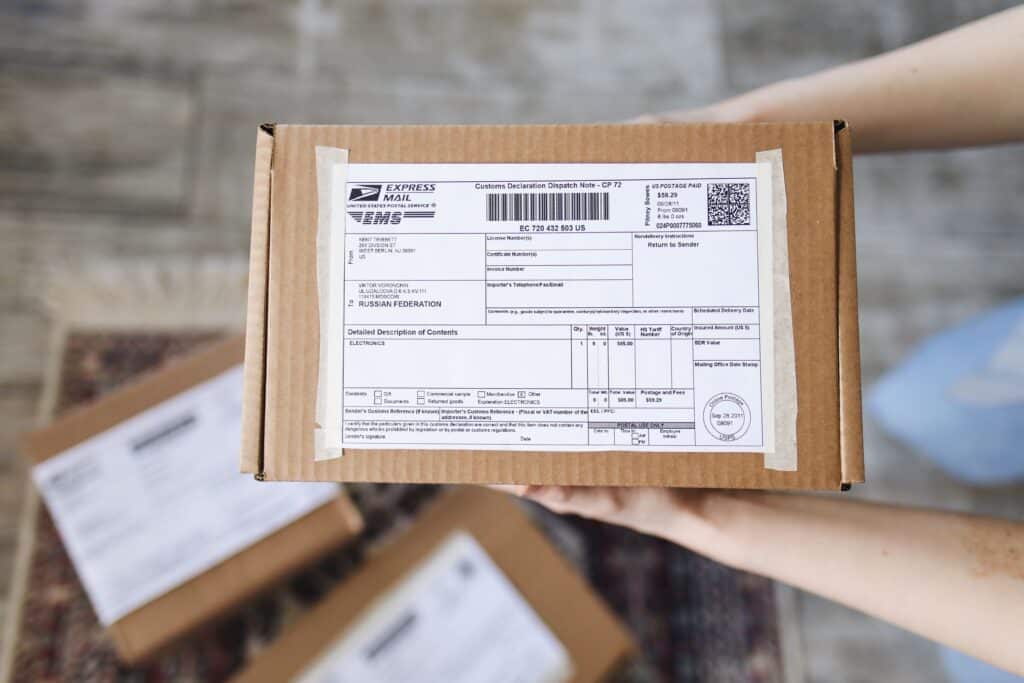
Essential data on chargeback trends, costs, and prevention strategies for ecommerce brands seeking to protect revenue and customer relationships
Ecommerce chargebacks have become a costly challenge, with global chargeback value forecast to reach $46.1 billion in 2029. For DTC and subscription ecommerce brands, the chargeback problem extends far beyond lost revenue. It erodes customer trust, increases operational costs, and threatens merchant account standing.
The data reveals a clear opportunity: brands that resolve customer issues proactively within the conversation can prevent avoidable disputes before they escalate to chargebacks. This is where an agentic post-purchase platform can help, executing eligible returns, exchanges, and delivery claims directly within the customer conversation rather than forcing customers toward their bank.
Key Takeaways
- Chargeback volume is accelerating: Global chargeback volume is projected to reach 359 million annual transactions in 2029, representing a 37% increase from 2025.
- Dispute handling carries substantial costs: Merchants incur an average of $128 in internal costs and third-party fees per chargeback, excluding the disputed transaction and lost merchandise.
- Fraud costs extend beyond direct losses: Every dollar lost to fraud costs US retail and ecommerce businesses approximately $5.13 in total costs when additional fraud-related expenses are included.
- Customers frequently bypass merchants: In 75% of dispute cases, cardholders contact their issuer instead of approaching the merchant first.
- Merchant-first communication creates prevention opportunities: When customers contact merchants first, 44% of customer inquiries are resolved through answers alone, while another 31% receive merchant remedies, such as refunds or replacements.
- Chargeback prevention remains a priority: The average chargeback rate across Sift’s Global Data Network reached 0.31% in 2026, increasing 19% between Q1 and Q2.
Understanding the Landscape: What Are Chargebacks and Disputes?
Chargebacks and refunds serve fundamentally different purposes in the ecommerce ecosystem. A refund is a merchant-initiated transaction returning money to a customer. A chargeback is a reversal initiated through the cardholder’s financial institution, potentially without merchant involvement. Understanding this distinction is critical for brands looking to reduce dispute volume and protect their merchant accounts.
1. Global chargeback volume was estimated at 261 million in 2025
Global chargeback volume was estimated at 261 million transactions in Mastercard’s March 2025 research with Datos Insights. The estimate reflected rising dispute-management demands as digital transactions expanded. Although newer forecasts are available, the historical estimate highlights the growing operational importance of preventing avoidable disputes and resolving customer issues early in the post-purchase experience.
2. Global chargeback volume is projected to reach 359 million in 2029
Mastercard’s updated 2026 research projects global chargeback volume will reach 359 million transactions annually in 2029, representing a 37% increase from 2025. This trajectory suggests dispute-management demands will continue growing, making prevention infrastructure increasingly valuable for ecommerce brands processing significant transaction volume across multiple payment methods.
3. 38% of consumers reported disputing a transaction within the preceding year
Javelin Strategy & Research found that 38% of consumers in its North American research had disputed at least one credit or debit card transaction within the preceding 12 months. Not every dispute becomes a formal chargeback. Many issues can be resolved through direct merchant communication, particularly those involving delivery problems, incorrect items, or transaction confusion.
4. Global retail ecommerce sales were projected at $6.419 trillion in 2025
Worldwide retail ecommerce sales were projected to reach $6.419 trillion in 2025, accounting for approximately 20.5% of global retail sales, according to EMARKETER’s February 2025 forecast. This massive transaction volume creates substantial exposure to payment disputes, making chargeback prevention and management important operational priorities for ecommerce brands.
The Cost of Friction: Why Ecommerce Chargebacks Matter
The financial impact of chargebacks extends far beyond the disputed transaction amount. Merchants face chargeback fees, operational costs for investigation and response, lost merchandise, and potential payment processor penalties. Understanding the true cost structure reveals why preventing eligible disputes can be more economical than recovering disputed revenue.
5. Chargeback handling costs merchants an average of $128
When accounting for third-party fees and internal operational expenses, merchants incur an average of $128 per chargeback, according to Mastercard’s 2026 reporting of Javelin research. This does not include the disputed transaction amount or the value of merchandise already delivered. Actual costs vary based on transaction value, processor fees, and resources required to manage each dispute.
6. Every $1 of fraud costs US merchants approximately $5.13
The fraud cost multiplier for US retail and ecommerce businesses reached approximately $5.13 for every dollar of direct fraud loss in 2026, according to LexisNexis Risk Solutions. The multiplier captures additional expenses associated with fraud, including operational, compliance, and related costs. It demonstrates why businesses need prevention strategies that address fraud risk without creating unnecessary friction for legitimate customers.
7. Financial institutions spend $9.08 to $10.32 processing each dispute
US financial institutions spend an average of $9.08 to $10.32 processing each chargeback dispute, according to Mastercard’s 2025 research. These administrative costs add pressure across the payment ecosystem and highlight the economic value of resolving eligible customer issues before they become formal disputes requiring investigation and documentation.
8. Global chargeback value was projected at $36.9 billion for 2026
Mastercard’s updated research projected $36.9 billion in chargebacks globally for 2026. The total economic impact can be higher after accounting for processing fees, operational expenses, and merchandise losses. These additional costs vary by merchant and dispute type, underscoring the importance of reducing avoidable chargebacks through improved customer communication.
9. Average chargeback value was $94 per transaction across four markets
Across the US, Brazil, Australia, and the UK, merchants reported an average chargeback value of $94 per transaction in Mastercard’s 2025 research. This baseline helps merchants understand potential chargeback exposure, although individual transaction values vary significantly by country and industry. Understanding average dispute values enables more accurate forecasting and helps prioritize prevention investments.
10. Merchants reported $46 in third-party dispute-handling fees
Surveyed merchants reported $46 in third-party fees associated with chargeback handling, alongside $82 in internal costs. These reported expenses illustrate how dispute-management services and staff resources increase the financial burden beyond the transaction itself. The combined cost structure reinforces the importance of resolving preventable disputes early.
Friendly Fraud and Its Impact on Ecommerce Merchants
Friendly fraud occurs when a legitimate cardholder disputes a valid transaction, either through confusion, buyer’s remorse, or intentional abuse. This category creates challenges that traditional third-party fraud prevention cannot fully address. Some disputes require better customer communication, while deliberate abuse demands additional detection and policy controls.
11. Merchants estimated that 43.8% of chargeback losses involved friendly fraud
In the 2026 Chargeback Field Report, surveyed merchants estimated that friendly fraud accounted for an average of 43.8% of chargeback losses. This figure represents merchant estimates rather than a verified industry-wide proportion. Friendly fraud can involve transaction confusion, dissatisfaction, or intentional misuse, making consistent classification and clear customer communication important.
12. 83.4% of enterprise merchants reported rising friendly fraud
The 2026 Chargeback Field Report found that 83.4% of enterprise merchants reported increased friendly fraud over the previous three years. This widespread increase suggests that established merchants continue to face difficulties identifying illegitimate disputes. Improved transaction visibility, accessible customer resolutions, and consistent policy enforcement can help businesses respond.
13. First-party fraud grew from 15% to 36% of reported fraud between 2023 and 2024
First-party fraud, which includes friendly fraud and certain forms of policy abuse, increased from 15% to 36% of reported fraud between 2023 and 2024, according to LexisNexis Risk Solutions. The change indicates that customer-initiated misuse became a larger share of reported fraud. Brands must adapt their prevention strategies to address this evolving threat alongside conventional unauthorized payment fraud.
14. First-party fraud accounted for 38.3% of reported fraud in 2025
LexisNexis Risk Solutions’ 2026 Cybercrime Report found that first-party fraud represented 38.3% of reported fraud globally in its 2025 data. The research identified first-party fraud as the leading reported fraud type for the second consecutive year. This reinforces the need for strategies that address misuse after legitimate customer interactions, not just unauthorized transactions.
15. 16% of consumers admitted to filing false fraud claims
In Sift’s October 2025 US consumer survey, 16% of consumers admitted to filing a false fraud claim despite being satisfied with their purchase. This deliberate abuse reflects how the dispute process can be misused. Making legitimate resolution processes more accessible can help reduce avoidable customer frustration, while intentional false claims require appropriate fraud controls.
Consumer Behavior: Why Customers Choose Chargebacks Over Refunds
Understanding why customers bypass merchants and file directly with their banks reveals actionable opportunities for prevention. Consumer disputes arise from several causes, including genuine fraud, delayed refunds, delivery issues, and transaction confusion. Accessible support and clear resolution policies can help merchants address eligible problems before they escalate.
16. 38% of surveyed consumers cited unauthorized purchases as a dispute reason
In Sift’s October 2025 consumer research, 38% of surveyed consumers who described dispute reasons cited unauthorized purchases. This was the leading reason identified in the survey. It highlights the continued importance of genuine payment fraud, even as operational and customer experience issues contribute to dispute activity.
17. 75% of cardholders bypass merchants entirely in dispute cases
Three-quarters of cardholders with disputes went directly to issuers rather than contacting the merchant first, according to Javelin’s research. This pattern means merchants frequently have no opportunity to resolve the issue before bank involvement. Improving the accessibility and responsiveness of direct support can create more opportunities for merchant-first resolution.
18. 18% of surveyed consumers cited delayed refunds as a dispute reason
Sift’s 2025 consumer survey found that 18% cited delayed refunds as a reason for filing a dispute. Refund processing delays and unclear status updates can increase frustration after a purchase. Brands that make refund policies understandable and provide timely updates give customers more reasons to continue working directly with the merchant.
19. 17% of surveyed consumers cited missing or late deliveries
In the same survey, 17% cited delivery problems involving missing or late orders as a dispute reason. Shipping uncertainty can become a payment dispute when customers cannot obtain clear tracking information or an appropriate resolution. Proactive delivery updates, accessible claims processes, and responsive support help address these problems earlier.
20. 24% of surveyed consumers experienced additional online fraud after a dispute
Sift reported that 24% of surveyed consumers experienced additional online fraud after filing a dispute. This finding does not establish that the original dispute caused subsequent fraud. It highlights the importance of protecting compromised payment information and helping customers understand the steps available after a fraudulent transaction.
Proactive Measures: Chargeback Prevention for Ecommerce Brands
Prevention can deliver better outcomes than recovery when merchants address the issues driving avoidable disputes. Customer communication, clear policies, and rapid resolution capabilities create opportunities to reduce chargeback volume before formal disputes arise. Brands that invest in post-purchase experience optimization can make legitimate resolutions easier to complete.
21. When customers contact merchants first, 44% of inquiries resolve through conversation
Direct communication resolves 44% of inquiries through answers alone when customers contact merchants first, according to Javelin’s 2025 research published in 2026. These resolutions can involve answering questions and clarifying transaction details without requiring refunds or replacements. The finding demonstrates how accessible communication can prevent some disputes from escalating unnecessarily.
22. Merchants resolve another 31% of direct contacts through customer remedies
Beyond inquiries resolved through conversation alone, merchants resolve another 31% through refunds or replacements. Together, these outcomes account for 75% of dispute-related inquiries reaching merchants first in the Javelin research. This illustrates the financial value of providing practical resolutions before customers proceed with formal disputes.
23. 83% of issuers associate rising disputes with greater customer awareness
Javelin’s 2026 research found that 83% of card issuers attributed increasing disputes partly to customers becoming more aware of their ability to dispute charges. Greater awareness can help legitimate fraud victims, but it also increases the importance of clear merchant communication. Brands need support processes that make legitimate refunds and resolutions accessible without undermining cardholder protections.
24. Ecommerce chargeback rates rose 222% in Sift’s 2024 analysis
Sift’s analysis of 2024 chargeback trends identified a 222% increase in ecommerce chargeback rates. The findings highlighted significant changes across digital commerce categories. This historical increase underscores why brands should monitor their own dispute reasons and address operational problems rather than relying exclusively on dispute recovery.
Streamlining Resolution: The Role of Agentic Post-Purchase Platforms
Traditional chargeback management focuses on recovering revenue after disputes occur. Agentic post-purchase platforms take a different approach: resolving eligible customer issues within the conversation before they escalate to bank disputes. This architecture can address friction associated with refunds, returns, order changes, and delivery problems.
Rapid Dispute Resolution (RDR) is another preventive mechanism that can automatically resolve eligible Visa disputes before they become formal chargebacks. These tools serve different purposes: pre-dispute payment systems manage qualifying bank disputes, while post-purchase CX platforms help merchants address customer needs earlier in the experience.
25. Sift’s average chargeback rate reached 0.31% in Q2 2026
Across the Sift Global Data Network, the average chargeback rate reached 0.31% in Q2 2026, representing a 19% increase compared with Q1 2026. Although this reflects Sift’s transaction dataset rather than a universal ecommerce benchmark, the increase demonstrates how changes in dispute frequency can create meaningful financial exposure for merchants processing significant transaction volume.
26. Card-not-present transactions represent 63% of merchant transaction volume
Card-not-present transactions represented 63% of merchant transactions in Mastercard’s 2025 research. These transactions can carry additional dispute risks because customers may not recognize digital purchases or recurring charges. The scale of digital commerce reinforces the need for accessible post-purchase support that can address issues before they escalate.
Building a Robust Defense: Integrating Chargeback Prevention Tools
The chargeback prevention ecosystem includes alert networks, fraud detection systems, evidence tools, and dispute-management platforms. Understanding their capabilities helps brands prioritize investments and build protection strategies that address both genuine fraud and avoidable customer disputes.
27. Ethoca Alerts has prevented more than 110 million chargebacks since 2011
Mastercard reports that the Ethoca alert network has helped prevent more than 110 million chargebacks since 2011. This cumulative figure demonstrates the role of early-warning networks in dispute prevention. Alerts give participating merchants an opportunity to review transactions and take appropriate action before eligible disputes become formal chargebacks.
28. 26.7% of merchants reported using AI-based fraud prevention tools in 2026
The 2026 Chargeback Field Report found that 26.7% of surveyed merchants were using AI-based fraud prevention tools. The findings illustrate growing adoption of automated risk-management capabilities, although implementation and effectiveness vary by merchant. Businesses should evaluate these tools based on their fraud patterns, integration requirements, and ability to support accurate decisions without unnecessary customer friction.
29. Merchant net recovery rate averaged just 10.7%
The 2026 Chargeback Field Report found that surveyed merchants achieved an average net recovery rate of 10.7% after accounting for factors such as second-cycle chargebacks. Although successful representment can recover disputed revenue, merchants must account for disputes they do not contest and the effort required to prepare evidence. The low overall recovery rate highlights the limitations of relying on dispute recovery alone.
Actionable Insights: Using Data to Drive Chargeback Reduction
Pattern recognition and data analysis enable proactive chargeback reduction. Brands that analyze dispute trends can identify recurring causes and implement targeted fixes rather than reacting to individual cases. Emerging forms of payment fraud and refund abuse make this visibility increasingly important.
30. 47% of consumers worry about unauthorized purchases by AI agents
Sift’s October 2025 survey found that 47% of consumers were concerned about AI agents making unauthorized purchases. This concern reflects new questions around transaction authorization and accountability as agentic commerce develops. Merchants need clear transaction records, appropriate controls, and accessible support to address potential disputes involving AI-assisted purchases.
31. 22% of consumers encountered refund hack tutorials
22% of consumers surveyed by Sift in October 2025 had encountered online tutorials teaching refund abuse tactics, primarily on TikTok (34%) and Facebook (29%). The availability of these tutorials can expose more consumers to methods of misusing return and dispute processes. This makes clear policies and consistent enforcement important alongside accessible customer service.
32. 10% of consumers admitted to trying refund hack tactics
One in ten consumers, or 10% of survey respondents, acknowledged trying refund abuse tactics in Sift’s October 2025 survey. Examples included returning worn items. These behaviors create additional challenges for ecommerce merchants because some forms of return abuse may not involve unauthorized payments. Addressing them requires consistent policy enforcement and appropriate checks while keeping legitimate resolutions accessible.
Industry-Specific Chargeback Trends
Chargeback rates vary significantly by industry. Understanding these patterns helps brands benchmark performance and identify whether elevated rates reflect sector-wide trends or specific operational problems.
33. Online travel and lodging chargeback rates surged 816% in Sift’s 2024 analysis
Online travel and lodging experienced an 816% increase in chargeback rates in Sift’s analysis of 2024 trends. This dramatic historical increase illustrates the risks associated with complex bookings, cancellation expectations, and delayed fulfillment. Travel businesses face particular challenges when customers dispute charges rather than following applicable cancellation procedures.
34. Retail ecommerce chargeback rates surged 233% in 2025
Retail ecommerce experienced 233% chargeback rate growth between Q1 and Q3 2025 across the Sift Global Data Network, while transportation rates increased 226%. These figures indicate that significant dispute growth affected multiple commerce categories. The findings underscore the need for prevention strategies informed by industry patterns and each merchant’s actual dispute data.
35. Digital goods and services chargeback rates increased 59% in Sift’s 2024 analysis
Digital goods and services saw chargeback rates increase 59% in Sift’s 2024 industry analysis. Digital purchases and recurring billing can create transaction recognition and cancellation-related disputes. Brands using subscription management automation can reduce friction by making eligible subscription changes and cancellations easier to complete.
Future Projections: Where Chargebacks Are Headed
The chargeback landscape will continue evolving as ecommerce grows and consumer behavior changes. Understanding projected trends helps brands build infrastructure that remains effective as the problem scales.
- Rising chargeback volume and value: Mastercard’s updated global forecasts indicate that both the volume and value of chargebacks are expected to rise through the end of the decade. These projections reinforce the importance of improving dispute prevention infrastructure rather than relying exclusively on post-dispute recovery.
- Customer trust and retention: Fraud prevention and accessible customer resolution remain important for maintaining customer confidence. Clear communication and effective post-purchase support can help brands protect long-term customer relationships while reducing avoidable disputes.
How Kodif’s Agentic Platform Prevents Chargebacks
The data consistently highlights an important opportunity: resolving eligible customer issues before they reach the bank can prevent avoidable chargebacks and reduce dispute-management costs. Kodif’s agentic post-purchase platform addresses this by executing returns, exchanges, delivery claims, and other resolutions directly within the customer conversation.
Traditional customer service workflows can require multiple handoffs, separate portals, and manual processes that leave customers waiting for a resolution. Kodif’s Resolution Agent combines AI intelligence with transaction execution capabilities to complete eligible actions within the conversation. Rather than stopping at an answer, the agent can check applicable policies and take the next step.
The platform supports chargeback prevention across multiple categories:
- Transaction recognition disputes: Order information and tracking details help customers identify legitimate purchases and understand their status before confusion becomes a dispute.
- Delivery issues: Automated claims workflows help resolve eligible missing, damaged, or protected-order issues without unnecessary manual handoffs.
- Return friction: Kodif supports automated return resolutions, including eligible returns, exchanges, refunds, and return-label generation within connected systems.
- Subscription confusion: Supported subscription changes, pauses, and cancellations help customers resolve recurring-billing concerns directly.
By executing these resolutions within customer conversations rather than simply providing information or routing tickets, Kodif addresses a source of avoidable dispute friction. Its ecommerce integrations provide the write-back capabilities needed to complete supported post-purchase actions while following configured policies.
The merchant-first contact findings make the opportunity clear. Customers who receive timely answers or appropriate remedies from merchants may have less reason to initiate a bank dispute. Brands need infrastructure that makes direct resolution accessible and practical.
For ecommerce brands dealing with significant chargeback volume, the architectural question matters: can your customer service platform actually execute the transactions needed to resolve issues, or does it only provide information? The answer affects how quickly your team can address customer concerns before they escalate into costly disputes.
Frequently Asked Questions
What is the average chargeback rate in ecommerce?
Across the Sift Global Data Network, the average chargeback rate reached 0.31% in Q2 2026, increasing 19% from Q1 2026. This is a network-specific benchmark rather than a universal ecommerce average. Actual chargeback rates vary by industry, merchant risk profile, transaction type, and reporting methodology. Merchants should benchmark their performance against comparable businesses using consistent definitions.
How can I differentiate between a genuine chargeback and friendly fraud?
Friendly fraud involves a legitimate transaction that a cardholder disputes without a valid basis, while genuine unauthorized transaction disputes involve purchases the cardholder did not authorize. In the 2026 Chargeback Field Report, merchants estimated that friendly fraud accounted for 43.8% of chargeback losses on average. Look for relevant evidence, including order confirmation, delivery records, transaction history, customer communication, and applicable fraud screening results. No single indicator establishes that a dispute is fraudulent.
What steps should I take immediately after receiving a chargeback notification?
Gather transaction evidence, including order confirmation, delivery proof, customer communication history, and any relevant fraud screening results. Respond within the deadline specified by your payment processor or card network. Stripe’s guidance describes typical evidence-submission windows of 5 to 21 days, although actual deadlines vary. Check whether an eligible pre-dispute resolution option remains available before deciding whether to contest the chargeback.
Can a customer perform a chargeback on a debit card?
Yes, customers can dispute eligible debit-card transactions. In the United States, consumer protections for unauthorized electronic fund transfers are governed by the Electronic Fund Transfer Act and Regulation E, alongside applicable card-network dispute procedures. Consumers should report unauthorized transactions promptly. Under applicable circumstances, notifying the financial institution within 60 days after the relevant statement is sent is important for limiting liability for subsequent unauthorized transfers.
What are the most common reasons for chargebacks in online retail?
Common reasons include unauthorized transactions, transaction non-recognition, delivery problems, product quality concerns, delayed refunds, and subscription cancellation difficulties. In Sift’s 2025 consumer research, 38% cited unauthorized purchases as a reason for disputing a transaction, while other respondents identified delayed refunds and missing or late deliveries. Addressing these friction points through clear billing descriptors, proactive tracking updates, accessible support, and easy cancellation processes can help reduce avoidable disputes.