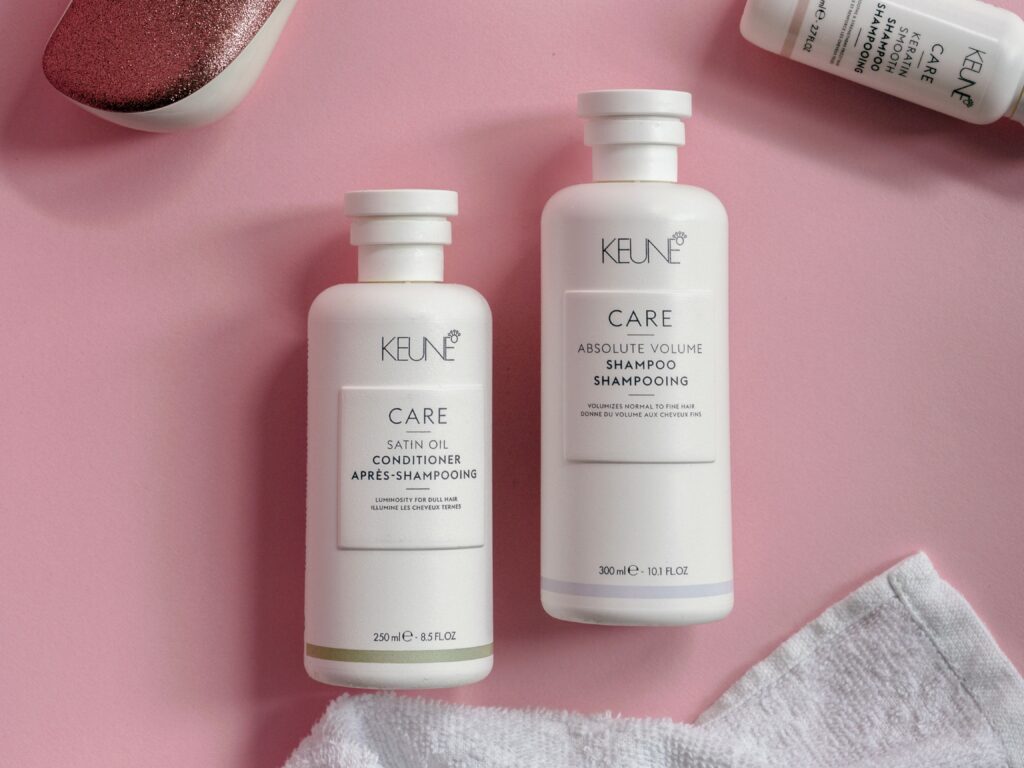
Cosmetics brands face a unique customer service challenge. Shoppers ask about shade matching before buying, ingredient information while considering a purchase, and returns processing after purchase.
A poor customer service experience can damage brand loyalty, making fast and reliable issue resolution essential for cosmetics brands. For cosmetics brands selling online, that means AI customer service needs to do more than answer questions. It needs to execute transactions, resolve post-purchase issues, and replicate the personalized guidance customers expect from in-store beauty consultants.
This guide evaluates 12 AI customer service platforms based on their fit for cosmetics brands, with particular attention to beauty-specific features, post-purchase automation depth, and reported performance in ecommerce environments.
Key Takeaways
- Kodif focuses on resolution: Its Resolution Agent executes eligible returns, exchanges, and delivery claims directly within customer conversations.
- Post-purchase execution matters: AI customer service should complete eligible transactions rather than only answer questions or route requests.
- Beauty support has unique needs: Shade matching, ingredient questions, and personalized recommendations require relevant product information.
- Integration depth is important: Brands should assess which actions AI platforms can execute across commerce, subscription, and support systems.
- Pre- and post-purchase support differ: Cosmetics brands should evaluate product discovery capabilities alongside returns, exchanges, and order management.
What Cosmetics Brands Should Look for in AI Customer Service Software
Beauty customer service differs from general ecommerce support. A foundation shade question requires different handling than a software access request. Ingredient sensitivity concerns need careful responses. Return requests for opened skincare products involve policy complexity that generic chatbots struggle to manage.
An effective AI customer service platform for cosmetics brands should:
- Execute post-purchase actions including returns, exchanges, refunds, and store credit
- Handle beauty-specific queries about shades, ingredients, and skin compatibility
- Automate delivery claims and shipping protection resolutions
- Support subscription management for replenishment programs
- Connect with Shopify, helpdesks, and subscription platforms through relevant integrations
- Maintain conversation context across channels
- Provide analytics on customer sentiment and recurring issues
The platforms below represent different approaches to these requirements, from post-purchase specialists to beauty-specific discovery tools to enterprise helpdesk platforms.
1) Kodif: Agentic Post-Purchase CX Platform for Cosmetics Brands
Kodif is an agentic post-purchase platform that combines AI customer service with the transaction rails needed to execute returns, exchanges, store credit, order changes, delivery claims, and shipping protection directly within customer conversations.
Platform Fit for Cosmetics Brands
Many AI CX platforms rely on external commerce APIs for transaction execution, while post-purchase platforms focus on transactional workflows. Kodif combines AI intelligence with post-purchase transaction rails. Its architecture has achieved 60%+ end-to-end automation for email conversations, while Kodif identifies roughly 35–40% automation as a common limitation for API-layer platforms with restricted transaction access.
For cosmetics brands dealing with high return volumes, shade-match exchanges, and subscription modifications, this distinction matters. The Resolution Agent can complete eligible actions without requiring customers or agents to switch into separate portals.
Key Features for Cosmetics
- Returns, exchanges, and store credit automation executed within conversations
- Delivery claims and shipping protection, with approximately 97% of protection claims approved
- Plain-English policy builder for CX teams to configure without engineering
- 100+ integrations with write-back capabilities across Shopify, Gorgias, Zendesk, Recharge, and subscription platforms
- Self-improving architecture that turns approved fixes into persistent guardrails
- Implementation typically completes in around 15 days
What Cosmetics Brands Should Consider
Kodif is particularly relevant when post-purchase automation is the primary goal. Brands with high return rates, active subscription programs, or significant delivery claim volumes may see the most direct impact. The platform also supports pre-purchase chat and product recommendations as secondary capabilities.
2) Alhena AI
Alhena AI positions itself as an ecommerce AI platform with features built specifically for beauty and skincare brands.
Primary Focus
Alhena AI is designed to replicate the in-store consultation experience online. For cosmetics brands where pre-purchase guidance drives conversion, the platform offers beauty-focused product discovery tools alongside customer support automation.
Key Features
- Skin Analyzer using selfie-based assessment for product recommendations
- Shade Finder for foundation and color cosmetics matching
- Regimen Builder for personalized multi-step skincare routines
- Revenue attribution analytics tracking AI-assisted sales
- Post-purchase workflow support alongside discovery features
3) Perfect Corp (YouCam)
Perfect Corp provides AI and AR beauty technology used by major cosmetics conglomerates including L’Oréal and Estée Lauder.
Primary Focus
Perfect Corp provides virtual try-on capabilities for cosmetics brands seeking to integrate product visualization into the customer experience. Its published Estée Lauder virtual try-on case study reports a 2.5x higher conversion rate.
Key Features
- Virtual Makeup Try-On with AR technology
- AI Skin Diagnostics for skincare recommendations
- PerfectGPT for beauty-specific conversations
- White-label deployment options
- Enterprise integrations for major beauty retailers
4) Zipchat
Zipchat is an AI sales agent with features built for beauty and skincare conversations.
Primary Focus
Zipchat addresses ingredient questions in beauty ecommerce. Customers research product formulations, and the platform is designed to provide guidance on ingredients and skin-type compatibility.
Key Features
- Ingredient and safety assistant for formulation questions
- Skin-type specific product recommendations
- WhatsApp replenishment campaigns for subscription brands
- Agentic Skills for return and exchange initiation
- Reported 85.6% of beauty conversations resolved without a human
5) Revieve
Revieve provides AI and AR beauty personalization across web, mobile, and in-store smart mirror deployments.
Primary Focus
Revieve provides personalization features for cosmetics brands operating across multiple channels. The platform received industry recognition in 2025, including finalist placements in three categories at the BeautyMatter NEXT Awards.
Key Features
- AI skin and face analysis
- White-labeled digital beauty platform
- Omnichannel deployment including in-store smart mirrors
- Clients include RoC Skincare, Paula’s Choice, and KIKO Milano
6) Gorgias
Gorgias is a customer experience platform built for ecommerce, with Shopify and Magento integrations.
Primary Focus
Gorgias supports Shopify beauty brands that need unified inbox management across email, chat, SMS, and social channels. The platform connects support conversations to order data and customer history.
Key Features
- Shopify integration with order data access
- AI Agent for order tracking, refunds, and subscription edits
- Omnichannel inbox consolidation
- Analytics linking support performance to sales
- Macros and automation rules
7) Siena
Siena positions itself as a CX operating system for DTC brands, with named customers including Spanx, Prose, and Coterie.
Primary Focus
Siena provides AI agents for DTC beauty brands that need refunds, labels, and replacements managed within customer conversations. Published customer automation rates range from 49% to 80%, depending on the deployment.
Key Features
- AI agents executing refunds, return labels, and replacements
- DTC consumer brand focus
- CX platform capabilities
- Published customer automation metrics
8) Zendesk AI
Zendesk is an enterprise helpdesk platform with AI capabilities supporting 80+ languages.
Primary Focus
Zendesk AI supports large cosmetics brands or multi-brand conglomerates requiring enterprise infrastructure and multilingual customer service.
Key Features
- AI Agents with support for 80+ languages
- AI Copilot for human agent assistance
- Intelligent Triage for ticket routing
- Action Builder for custom workflows
- Marketplace integrations
9) Intercom Fin
Intercom Fin is an AI customer service agent that can run natively or integrate with third-party helpdesks.
Primary Focus
Intercom provides conversational, messaging-first customer experiences. The company reports that Fin resolves an average of 76% of customer queries and supports 45+ languages.
Key Features
- Flexible deployment options
- No-code workflow builder
- Tasks and Procedures for actions like order cancellation
- Support for 45+ languages
- Messaging-focused interface
10) Yuma
Yuma sits inside existing helpdesks like Gorgias, Zendesk, and Kustomer rather than replacing them.
Primary Focus
Yuma provides AI capabilities within existing helpdesks, allowing cosmetics brands to automate customer service workflows without migrating to a new platform. The platform publishes customer-level automation results.
Key Features
- Works inside existing helpdesks
- Actions including refunds, labels, and subscription edits
- Shopify-native with Recharge, Loop, and Klaviyo integrations
- Published automation metrics for individual customers
11) Ada
Ada provides AI customer service with support for 60 languages and no-code workflow automation.
Primary Focus
Ada supports international cosmetics brands requiring multilingual customer service. The platform provides ecommerce and CRM integrations alongside enterprise AI capabilities.
Key Features
- Support for 60 languages
- No-code workflow automation
- Proprietary Reasoning Engine with NLP
- Security and administrative controls
12) Tidio
Tidio provides live chat and AI customer service capabilities for small businesses through its Lyro AI agent and customer support tools.
Primary Focus
Tidio supports indie beauty brands and DTC startups seeking a combined live chat and AI customer service setup. Tidio reports that Lyro resolves 75% of conversations end to end.
Key Features
- Lyro AI agent with generative AI
- Shopify integration
- Live chat and AI customer service combination
- Setup tools for small teams
Why Kodif Fits Cosmetics Brands’ Post-Purchase Needs
Cosmetics brands need AI that does more than answer questions. They need systems that can execute the transactions customers actually request: process the return, issue the store credit, handle the delivery claim, or modify the subscription.
Kodif addresses that need by combining AI intelligence with post-purchase transaction rails. Its architecture has achieved 60%+ end-to-end automation for email conversations by giving AI agents the write access needed to complete eligible workflows.
For cosmetics brands, Kodif supports workflows such as:
- Eligible returns and shade-related exchanges through the Resolution Agent
- Subscription skincare programs requiring pause, skip, and frequency changes
- Delivery claims and shipping protection resolutions
- Store credit and loyalty workflows
- Order tracking and modification requests
The platform’s policy builder allows CX teams to configure return rules and subscription workflows in plain English without requiring engineering resources. Kodif can execute eligible actions according to those policies while maintaining brand voice and escalating edge cases appropriately.
The global Beauty & Personal Care market is projected to generate $754.37 billion in revenue in 2026, with 30.6% of revenue coming from online channels. As online commerce expands, Kodif helps cosmetics brands manage post-purchase requests through connected, action-capable customer service workflows.
For cosmetics brands looking to automate returns, exchanges, delivery claims, and subscription requests, Kodif offers a post-purchase-focused approach.
Frequently Asked Questions
What makes AI customer service different for cosmetics brands?
Cosmetics brands face unique challenges, including shade matching questions, ingredient sensitivity concerns, and returns for products that did not match expectations. Effective AI customer service for beauty needs to handle both pre-purchase guidance and post-purchase transaction execution. Kodif addresses the post-purchase side by giving AI agents the ability to execute eligible returns, exchanges, and delivery claims directly within conversations.
How can cosmetics brands reduce return-related support costs?
The key is automating execution, not just conversation. Some AI platforms can answer questions about return policies but still require manual processing for certain actions. Platforms with write access to commerce systems can complete eligible returns without human intervention. Kodif’s post-purchase-native architecture combines AI customer service with the transaction capabilities needed to resolve these requests end to end.
What is the difference between agentic AI and traditional chatbots?
Traditional chatbots primarily answer questions and route tickets. Agentic AI can also take actions within connected systems. For cosmetics brands, that means an agentic platform can process an eligible return, issue store credit, or resolve a delivery claim rather than only explaining what steps the customer should take. Kodif connects customer conversations with these post-purchase actions.
Should cosmetics brands choose a beauty-specialized platform or a general AI solution?
It depends on the primary challenge. Brands focused on pre-purchase product discovery should assess capabilities such as skin analysis, ingredient information, and virtual try-on. Brands where post-purchase support represents the main volume should prioritize transaction execution. Kodif is particularly relevant when returns, exchanges, and delivery resolutions are central to the customer service workload.
How quickly can cosmetics brands implement AI customer service?
Implementation timelines vary by platform complexity and workflow requirements. Kodif typically completes implementation in around 15 days from kickoff to live production. Exact timelines depend on the integrations, policies, and post-purchase workflows a cosmetics brand needs to automate.